there I said it. CRAP CRAP CRAP!
I saw the RE today and was given the news she will not do injectable drugs unless I agree to IVF or IUI. Not gonna happen. She finally offered to monitor a cycle as a "diagnostic" and give progesterone once ovulation was confirmed insurance will cover it she said as we walked to the ins/billing office. Once inside billing had a different view. oh heck no it is not covered this is TREATMENT with IUI/IVF... uh what? That is not what dr said.
Things went down hill from there. I was accused of trying to falsify ins info. I was nearly in tears and trying not to get angry. I said what dr had said this, billing said that, ins says something else so I was very confused! I was promptly given a list of benefits and shown the door.
I'm waiting on ins guy to call me back. I guess I am looking for a new NEW DR.
I'm still angry. Steaming mad really.
I can't believe I was accused of trying to break the law because I believed my doctor.
oh and when I said I was tired of this hormonal swing, that I had said to Hubs once maybe I should just get a hysterectomy... she agreed with me. After all my hormones won't fix themselves. DUH! grrr. Oh I could also take the Birth Control Pill... even though it makes me puke nonstop and uh we would like the option of another baby if Father YAH wills it. Geez Louis is it that hard to understand!?
Showing posts with label Infertility. Show all posts
Showing posts with label Infertility. Show all posts
August 5, 2013

August 3, 2013
a blessing in disguise
This being our second loss in 9 months the fertility dr ordered extensive labs on Hubs and I. So far my has come back "normal" which is ok I guess just means we still have no reason why we lost the babies. I have thyroid labs on Monday since I haven't had them checked in a while.
Hub's labs did come back with a issue. His thyroid levels are through the roof which is no beuno. The dr is testing him for Graves disease and we are waiting for those results to come back. From what I gather having too high levels of thyroid causes serious health issues the worst is sudden cardiac death. Our PCP told us not to "go there" until we have all the testing done because it is treatable with meds and/or surgery. WHEW!
I'm so glad the fertility dr pushed for BOTH of us to be tested! It has given us the heads up to a situation that needed addressed and gets Hubs on the road to wellness. Praise God!
Hub's labs did come back with a issue. His thyroid levels are through the roof which is no beuno. The dr is testing him for Graves disease and we are waiting for those results to come back. From what I gather having too high levels of thyroid causes serious health issues the worst is sudden cardiac death. Our PCP told us not to "go there" until we have all the testing done because it is treatable with meds and/or surgery. WHEW!
I'm so glad the fertility dr pushed for BOTH of us to be tested! It has given us the heads up to a situation that needed addressed and gets Hubs on the road to wellness. Praise God!
May 5, 2011
adjusted?
I am on round 3 of my Clomid for my hormone imbalance. This is the FIRST month that I have no side effects! I didn't temp or OPK this month to confirm changes with ovulation but I know it happened. I think.
I am just enjoying the fact I feel NORMAL!
I am sleeping again. Face breakouts are less. NO bloating and looking 12 months pregnant. No severe tummy pains after ovulation to menstruation. NORMAL.
And even though I have no lost any weight by the scale I have dropped a few skirt sizes :)
JOY!
I am just enjoying the fact I feel NORMAL!
I am sleeping again. Face breakouts are less. NO bloating and looking 12 months pregnant. No severe tummy pains after ovulation to menstruation. NORMAL.
And even though I have no lost any weight by the scale I have dropped a few skirt sizes :)
JOY!
February 3, 2011
one year
One year ago today I got the only glimpse of my new baby on this side of heaven
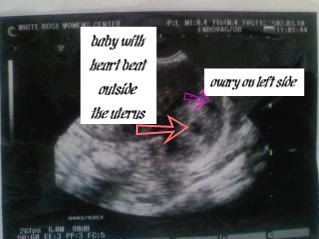
Just a few short hours later I was wheeled into surgery to save my life as my left ovarian tube slowly ripped open from the growth of our baby. My tube and life were saved but I lost a piece of my heart.
Sweet little one you are worshipping at the feet of our King! Perfect and whole in heaven! Praise God for sparing you the pain of this world. I will hold you in my heart til I am there to hold you forever.

Just a few short hours later I was wheeled into surgery to save my life as my left ovarian tube slowly ripped open from the growth of our baby. My tube and life were saved but I lost a piece of my heart.
Sweet little one you are worshipping at the feet of our King! Perfect and whole in heaven! Praise God for sparing you the pain of this world. I will hold you in my heart til I am there to hold you forever.
January 20, 2011
dr visit -brief as it was
I travelled to my doctor yesterday since my appointments started at 8am.
This morning I awoke to news of massive snow and ice with school closures so I was glad my hotel was just blocks from the hospital. I got checked in and was told (by the only person in registration!) that no one was showing up because of the road conditions. panic.
I took my oldest daughter and headed for the the eye doctor for our exams. I was halfway through my exam when the nurse came in and announced the weather was now so bad all non-emergency hospital staff/doctors were to close at 10am. It was a quarter to 9! ACK! I still had my PCP and OBGYN to see!!
I rushed to the PCP's office and told them the OBGYN visit was more important and that I was going there first. They agreed since I was just rechecking things with that Dr. The kids had to wait in the waiting area since no one under 16 (unless expecting or a nursing infant) is allowed in the OB floor....hell broke loose in the 10 min they were in there thanks to my son. GRRRRR
I rushed over to the OB floor and got in just in time to see the doctor before he left. In fact as I checked out the nurse said she had just called my phone and canceled my appointment! LOL She didn't see me sneak in :)
Basically-
He likes my chart, lab work, and OPK readings
He does NOT thing I have PCOS!
I am starting Clomid next cycle
I will have another HSG next cycle... I tried for one today but with the hosp closing I was out of luck
I have to keep charting and using OPKs just to verify things are OK. He thinks my hormones are "slightly off" if that and Hubby must be tested before I have my meds upped...no sense in messing with me really strongly if **I am not the only issue.
I did make it back to my PCP. He decided I will be back to remove some moles (OUCH!) and follow up on weight loss (UGH!). I did get a nice shot of some antiinflammatory to help my hip pain that started a week ago. Sure helped that 6 hr drive home go by better! So that was 4 doctors visits in just at 2.5 hrs! With breakfast thrown in and 3 unruly kids mad at being woke up so early!
 |
| sunset in NW Oklahoma |
This morning I awoke to news of massive snow and ice with school closures so I was glad my hotel was just blocks from the hospital. I got checked in and was told (by the only person in registration!) that no one was showing up because of the road conditions. panic.
 |
| the storm beginning to produce large flakes with sleet on way to Hospital I didn't loose the 2 in thick ice on the underside and sides of my truck until 5 hrs later in DALLAS! |
I took my oldest daughter and headed for the the eye doctor for our exams. I was halfway through my exam when the nurse came in and announced the weather was now so bad all non-emergency hospital staff/doctors were to close at 10am. It was a quarter to 9! ACK! I still had my PCP and OBGYN to see!!
I rushed to the PCP's office and told them the OBGYN visit was more important and that I was going there first. They agreed since I was just rechecking things with that Dr. The kids had to wait in the waiting area since no one under 16 (unless expecting or a nursing infant) is allowed in the OB floor....hell broke loose in the 10 min they were in there thanks to my son. GRRRRR
I rushed over to the OB floor and got in just in time to see the doctor before he left. In fact as I checked out the nurse said she had just called my phone and canceled my appointment! LOL She didn't see me sneak in :)
Basically-
He likes my chart, lab work, and OPK readings
He does NOT thing I have PCOS!
I am starting Clomid next cycle
I will have another HSG next cycle... I tried for one today but with the hosp closing I was out of luck
I have to keep charting and using OPKs just to verify things are OK. He thinks my hormones are "slightly off" if that and Hubby must be tested before I have my meds upped...no sense in messing with me really strongly if **I am not the only issue.
I did make it back to my PCP. He decided I will be back to remove some moles (OUCH!) and follow up on weight loss (UGH!). I did get a nice shot of some antiinflammatory to help my hip pain that started a week ago. Sure helped that 6 hr drive home go by better! So that was 4 doctors visits in just at 2.5 hrs! With breakfast thrown in and 3 unruly kids mad at being woke up so early!
Best site after hours in the car!
NEARLY HOME!!!
 |
| coming into "Big D" |
PS-
after a ONE DAY trip does your vehcile look like this?!
 |
| for my part that is a case of water mostly taking up that seat and the cooler the water should have been in... uh yeah |
 |
| caught in the act of trying to make things look less messy ;) |
Please say I am not alone here!
January 17, 2011
one year ago
This time last year we found out we were expecting and two weeks later I learned it was an ectopic (tubal) pregnancy and I was rushed into surgery. Now I am waiting to see my OBGYN later this week to begin treatments for my infertility lab work I had done last month.
Emotionally I am handling things better than I thought. I am not on antidepressants anymore and don't feel like I need them to make it through. I did cry at church yesterday as it was brought up this is Sanctity of Life week and my heart ached for our little one. Then I cried even more as we watched our friend's testimony played on the video screens...it was the first time we have seen video of him since his tragic death last August. It reminds us all just how short life is.
I am ready to move forward. Lord willing these lab results will tell us why I am so "sick" and my body is not functioning as it should. It will be a bonus if this also explains my 23 months of infertility/inability to carry a baby (the 2 miscarriages before the ectopic).
Please keep us in your prayers as I travel and see the Dr on Wednesday and Thursday.
thank you.
Emotionally I am handling things better than I thought. I am not on antidepressants anymore and don't feel like I need them to make it through. I did cry at church yesterday as it was brought up this is Sanctity of Life week and my heart ached for our little one. Then I cried even more as we watched our friend's testimony played on the video screens...it was the first time we have seen video of him since his tragic death last August. It reminds us all just how short life is.
I am ready to move forward. Lord willing these lab results will tell us why I am so "sick" and my body is not functioning as it should. It will be a bonus if this also explains my 23 months of infertility/inability to carry a baby (the 2 miscarriages before the ectopic).
Please keep us in your prayers as I travel and see the Dr on Wednesday and Thursday.
thank you.
August 26, 2010
The Birth Control Pill Documentary
The Birth Control Pill Documentary from T Herbert on Vimeo.
A Christian worker, his family and a nurse friend investigate throughout North America to uncover the truth about the birth control pill. The debate has been raging for a decade and yet so few people know about it. How could this be? How does the pill really work? Can everyday oral contraceptives really cause abortions? Why are so many people uninformed?Discover how this could be a deadly silence.
Find out what has shocked doctors and nurses.
Be informed! Inform others!
Visit us at 28daysonthepill.com
July 20, 2010
Infertility Myths & Facts
1. MYTH: Infertility is a woman's problem.
FACT: It surprises most people to learn that infertility is a female problem in 35 percent of the cases, a male problem in 35 percent of the cases, a combined problem of the couple in 20 percent of cases, and unexplained in 10 percent of cases, according to the American Society for Reproductive Medicine. It is essential that both the man and the woman be evaluated during an infertility evaluation.
 Common male infertility factors include azoospermia (no sperm cells are produced) and oligospermia (few sperm cells are produced). Sometimes, sperm cells are malformed or they die before they can reach the egg. In rare cases, infertility in men is caused by a genetic disease such as cystic fibrosis or a chromosomal abnormality.
Common female infertility factors include ovulation disorders, or blocked fallopian tubes, which can occur when a woman has had pelvic inflammatory disease or endometriosis (a sometimes painful condition causing adhesions and cysts). Congenital anomalies (birth defects) involving the structure of the uterus and uterine fibroids are associated with repeated miscarriages.
2. MYTH: The truth is, most people get pregnant at the drop of a hat.
FACT: More than 7.3 million Americans, or 1 in 8 women of childbearing age, had trouble getting pregnant or carrying a baby to term in 2002, the most recent data available from the Centers for Disease Control and Prevention. That's a jump of nearly 20 percent over 1995.
3. MYTH: It's all psychological: Stress is the leading cause of infertility. People just need to relax and they'll get pregnant.
FACT: Infertility is a medical problem; it is a disease or condition of the reproductive system. While relaxation may help with overall quality of life, stress and deep emotions may result from struggles with infertility, not cause it. A recent survey conducted for RESOLVE, The National Infertility Association, revealed that 22% of women mistakenly believe that stress is the number one cause of difficulty conceiving, rather than a medical condition. At least 50 percent of those who complete an infertility evaluation respond to treatment with a successful pregnancy. Those who do not seek help have a "spontaneous cure rate" of about 5 percent after a year of infertility.
Stress is not a cause of infertility, though it can frequently be a side effect of it.. Advising infertile couples that they should "just relax," when what they have is a medical problem, isn't helpful and may be hurtful. A vacation doesn't magically clear up blocked fallopian tubes or raise a low sperm count. Couples do tend to have more sex when they're away from their daily routines and responsibilities, and so if the couple in question is one of the (very rare) few for whom infertility is caused by infrequent intercourse, a vacation can be a boon.
4. MYTH: After people adopt a baby they usually get pregnant.
FACT: Studies reveal that the rate for achieving pregnancy after adopting is the same as for those who do not adopt.
5. MYTH: Adoption is the only ethical and ecological solution to infertility: It’s a lot cheaper and easier than medical treatment and there are so many babies out there who need homes.
FACT: “The biological urge to have children is so strong,” says Dr. Daniel Whitesides of REACH, “the truth is that most people we treat explore medical treatment for infertility prior to considering adoption.” Contemporary adoption options have changed, and adoption can be more costly and time-consuming than expected. It is, however, still possible to adopt a healthy baby.
6. MYTH: Marriages rarely survive infertility struggles.
FACT: The majority of couples manage the infertility crisis, learning in the process new ways of relating to each other, improving their understanding of different coping styles they may have, and deepening their communication, which actually serves to improve their relationship in years to follow and indirectly helps them become better parents.
7. MYTH: Infertility is a personal failing.
FACT: Infertility is a crisis and it is normal for people to feel a sense of inadequacy that affects their self-esteem and self-image. The American Society for Reproductive Medicine highly recommends all those who face infertility issues become more informed about the wide range of options and connect with others facing similar challenges, as well as considering professional counseling.
8. MYTH: Infertility is not problematic for people until they hit their late 30s.
FACT: Most people are not aware that for women, infertility decline begins at 27 or even sooner, although the most significant decline occurs in the mid 30s. According to the American Society for Reproductive Medicine, approximately 10 percent of women under 35 experience infertility and that number more than doubles to 22 percent for women ages 35-39. For women over 40 years old, the number nearly triples to 29 percent. Infertility is defined for patients under the age of 35 as the failure to conceive after one year of intercourse without using contraceptives. For patients older than 35, this time frame is shortened to six months. In addition, recent research indicates that men, too, may experience a decline in fertility with age.
“The drop in natural pregnancy rates is directly correlated to the effects of normal ovarian aging - as women age, their eggs become less fertile and chromosomal abnormalities may begin to appear,” says Dr. Nancy Teaff of REACH. “But the good news is that with the appropriate treatment, the majority of our patients will conceive.”
9. MYTH: People who have successfully conceived before shouldn’t have trouble with fertility later in life.
FACT: According to the National Survey of Family Growth, more than one million couples grapple with “secondary infertility.” A previously fertile partner may be trying to have a child with a new spouse, or one or both partners in an existing relationship have developed fertility problems since their last child was conceived, (e.g., endometriosis – one of the most frequent causes of secondary infertility in women), irregular ovulation, or fallopian tube disease. Or a man might have had a decline in the concentration or motility of his sperm. Other factors can involve age (even five years can make a big difference in a woman's fertility cycle and a man's sperm count), scarring after childbirth, or stress, which can affect ovulation and sperm production.
10. MYTH: Infertility treatment has gotten way too high-tech.
FACT: Most infertility problems -– 85 to 90 percent -- are treated with conventional therapies, such as drug treatment or surgical repair of reproductive organs. For infertile couples where women have blocked or absent fallopian tubes, or where men have low sperm counts, in vitro fertilization (IVF) offers a chance at parenthood to couples who until recently would have had no hope of having a "biologically related" child.
IVF accounts for less than 5 percent of all infertility treatment in the United States. Since IVF was introduced in the United States, in 1981 through the end of 2002, almost 300,000 babies have been born as a result of reported Assisted Reproductive Technology procedures (ART). About 1 percent of American babies born each year had help from IVF, according to the American Society for Reproductive Medicine. The percentage could be a lot higher. An estimated 50 percent to 80 percent of infertile couples never seek medical care because they can't afford it or their insurance does not cover treatment.
11. MYTH: IVF is still pretty risky.
FACT: The average live delivery rate for IVF in 2000 was 29.9 percent per retrieval -- slightly better than the 20 percent chance that a reproductively healthy couple has of achieving a pregnancy and carrying it to term.
12. MYTH: Using IVF means multiple births.
FACT: In the last five years, doctors have had great success implanting better developed, five-day-old embryos in a mother’s uterus, instead of the older method of transferring three-day-old embryos. The result has been vastly improved pregnancy rates, and the March 16, 2006, issue of the New England Journal of Medicine strongly supported this method for infertile women younger than 36.
With multiple transfers come a heightened chance of multiple births, which dramatically increase the odds of prematurity, low birth weight, disability, and death for the infants, and risks of preeclampsia, diabetes, placental problems, caesarean section and other delivery complications for the mother.
“We are much more aggressive in informing patients about all the things that can go wrong with multiple pregnancies,” says Dr. Richard Wing of REACH, “We’re not comfortable being part of unnecessary risk, and we are letting our patients know that in as plain a language as possible.”
13. MYTH: The “hips up theory” is the best position for conception.
FACT: It doesn't matter what position is used. The sperm has to get into the cervical mucus within five minutes, or they are inactivated by the active PH of the vagina. So having hips rest on a pillow or staying in the position at the time of ejaculation will not enhance fertility.
14. MYTH: Egg freezing is only useful for women with medical conditions like cancer.
FACT: Egg freezing is a great option for single women under 40 who are concerned about their fertility options. Cyropreservation technology is improving daily. “I meet lots of women who feel that the social pressure on women to find a partner by their mid-30s is grossly unfair,” says licensed psychologist Dr. Eugenia Gullick, REACH counseling director. “Some have told me they would be highly interested in this option because it would put them under less stress to find Mr. Right on a timetable.”
15. MYTH: Vitamin B6 can extend the luteal phase.
FACT: The only thing that will extend the luteal phase is to improve ovulation or provide extra progesterone. (The luteal phase is the day after ovulation and runs through the remainder of a woman's cycle when a women produces progesterone increasing her temperature, which acts like an incubator for maturing a fertilized egg if conception has occurred.)
16. MYTH: Taking two double-strength aspirin a day can help fertility.
FACT: There's no data to indicate taking two double-strength aspirin a day can help fertility; some studies suggest that it can adversely affect ovulation and the release of the egg. For women who have problems with miscarriage or have a tendency toward easy blood clotting, one baby aspirin a day can make the difference between a successful and unsuccessful pregnancy.
17. MYTH: Robitussin cough medicine can help with conception.
FACT: For a long time Robitussin was used by physicians and women alike to improve cervical mucus. There was a randomized placebo controlled study done, and there was no difference in either cervical mucus quality or pregnancy rate.
18. MYTH: Herbal fertility supplements are overrated.
FACT: There are many herbal substances, nutritional supplements, and so-called "fertility enhancers" that should be used when prescribed by a physician, health care provider, naturopath, or herbalist -- someone who knows about their properties. While there is no conclusive medical research, there is supportive evidence that they may be helpful.
19. MYTH: Methods like acupuncture don’t help with infertility.
FACT: Studies comparing women who went through acupuncture and women who didn't, indicate it can enhance fertility. In fact, there are acupuncturists now who specialize in fertility, and “our patients who have utilized acupuncture and other complementary methods have unquestionably benefited,” says Dr. Nancy Teaff of REACH.
20. MYTH: Diet is important for pregnancy, not conception.
FACT: Removing sugars from the diet, (e.g., caffeine, white flour, white sugar, white corn, white rice, etc.), will improve ovulation and regularity. Foods that are broken down quickly raise insulin levels too quickly and disrupt delicate hormonal values in the ovaries causing more testosterone to be produced, impairing egg quality and thus possibly lowering the chance of conception. In some women, high insulin levels may cause irregular ovulation, irregular periods, or polycystic ovarian syndrome (PCOS).
21. MYTH: People with lower body fat, like marathon runners and dancers, get pregnant more easily.
FACT: Body fat within normal range, which is between 20 and 24 percent of body weight for women, is very important in making sure that the reproductive system functions normally. If the body mass index or BMI, which is a measure of body fat, is too low or too high, it can adversely affect the ability to conceive. According to RESOLVE, The National Infertility Association, body fat levels 10 percent to 15 percent below normal can completely shut down the reproductive process. Women at risk include those with eating disorders, such as anorexia nervosa or bulimia, and women on a very low-calorie or restrictive diet. Strict vegetarians also may experience infertility problems due to a lack of important nutrients such as vitamin b-12, zinc, iron and folic acid.
22. MYTH: Sugar substitutes interfere with conception less than natural sugar.
FACT: No data exists that has shown that overall usage of sugar substitutes is better than the known bad effects of sugar. Natural sweeteners like fructose and stevia, maltall and xyletol are recommended in moderate amounts.
23. MYTH: Vegetarians and those who limit their protein have no problems with conception.
FACT: Adequate protein intake is essential for conception. About half of all women do not get adequate protein intake, particularly vegans and vegetarians. Vegans and vegetarians also do not get vitamin B12, zinc, iron and folic acid.
24. MYTH: Only women need to be concerned with nutritional supplements to enhance their chances of conception.
FACT: Men who take selenium (200mg/day) and zinc (50mg/day) have improved the number and quality of sperm. In addition, a low-glycemic diet for men has been demonstrated to have beneficial affects on sperm.
25. MYTH: Cannabis (marijuana) has no impact on conception or healthy embryo development.
FACT: Smoking cannabis may lead to miscarriages or ectopic pregnancies, according to University of Nashville research just published in the July Journal of Clinical Investigation. Vanderbilt University researchers in Nashville, Tennessee, have also found that cannabis can trigger inadequate chemical levels that prevent normal embryo development, transport into the womb and implantation. “Unquestionably, marijuana use in both men and women should be eliminated if they desire to conceive,” says Dr. Richard Wing of REACH.
blunt HONEST. But if I hear "just relax" one more time I will come unglued!
FACT: It surprises most people to learn that infertility is a female problem in 35 percent of the cases, a male problem in 35 percent of the cases, a combined problem of the couple in 20 percent of cases, and unexplained in 10 percent of cases, according to the American Society for Reproductive Medicine. It is essential that both the man and the woman be evaluated during an infertility evaluation.
Common male infertility factors include azoospermia (no sperm cells are produced) and oligospermia (few sperm cells are produced). Sometimes, sperm cells are malformed or they die before they can reach the egg. In rare cases, infertility in men is caused by a genetic disease such as cystic fibrosis or a chromosomal abnormality.Common female infertility factors include ovulation disorders, or blocked fallopian tubes, which can occur when a woman has had pelvic inflammatory disease or endometriosis (a sometimes painful condition causing adhesions and cysts). Congenital anomalies (birth defects) involving the structure of the uterus and uterine fibroids are associated with repeated miscarriages.
2. MYTH: The truth is, most people get pregnant at the drop of a hat.
FACT: More than 7.3 million Americans, or 1 in 8 women of childbearing age, had trouble getting pregnant or carrying a baby to term in 2002, the most recent data available from the Centers for Disease Control and Prevention. That's a jump of nearly 20 percent over 1995.
3. MYTH: It's all psychological: Stress is the leading cause of infertility. People just need to relax and they'll get pregnant.
FACT: Infertility is a medical problem; it is a disease or condition of the reproductive system. While relaxation may help with overall quality of life, stress and deep emotions may result from struggles with infertility, not cause it. A recent survey conducted for RESOLVE, The National Infertility Association, revealed that 22% of women mistakenly believe that stress is the number one cause of difficulty conceiving, rather than a medical condition. At least 50 percent of those who complete an infertility evaluation respond to treatment with a successful pregnancy. Those who do not seek help have a "spontaneous cure rate" of about 5 percent after a year of infertility.
Stress is not a cause of infertility, though it can frequently be a side effect of it.. Advising infertile couples that they should "just relax," when what they have is a medical problem, isn't helpful and may be hurtful. A vacation doesn't magically clear up blocked fallopian tubes or raise a low sperm count. Couples do tend to have more sex when they're away from their daily routines and responsibilities, and so if the couple in question is one of the (very rare) few for whom infertility is caused by infrequent intercourse, a vacation can be a boon.
4. MYTH: After people adopt a baby they usually get pregnant.
FACT: Studies reveal that the rate for achieving pregnancy after adopting is the same as for those who do not adopt.
5. MYTH: Adoption is the only ethical and ecological solution to infertility: It’s a lot cheaper and easier than medical treatment and there are so many babies out there who need homes.
FACT: “The biological urge to have children is so strong,” says Dr. Daniel Whitesides of REACH, “the truth is that most people we treat explore medical treatment for infertility prior to considering adoption.” Contemporary adoption options have changed, and adoption can be more costly and time-consuming than expected. It is, however, still possible to adopt a healthy baby.
6. MYTH: Marriages rarely survive infertility struggles.
FACT: The majority of couples manage the infertility crisis, learning in the process new ways of relating to each other, improving their understanding of different coping styles they may have, and deepening their communication, which actually serves to improve their relationship in years to follow and indirectly helps them become better parents.
7. MYTH: Infertility is a personal failing.
FACT: Infertility is a crisis and it is normal for people to feel a sense of inadequacy that affects their self-esteem and self-image. The American Society for Reproductive Medicine highly recommends all those who face infertility issues become more informed about the wide range of options and connect with others facing similar challenges, as well as considering professional counseling.
8. MYTH: Infertility is not problematic for people until they hit their late 30s.
FACT: Most people are not aware that for women, infertility decline begins at 27 or even sooner, although the most significant decline occurs in the mid 30s. According to the American Society for Reproductive Medicine, approximately 10 percent of women under 35 experience infertility and that number more than doubles to 22 percent for women ages 35-39. For women over 40 years old, the number nearly triples to 29 percent. Infertility is defined for patients under the age of 35 as the failure to conceive after one year of intercourse without using contraceptives. For patients older than 35, this time frame is shortened to six months. In addition, recent research indicates that men, too, may experience a decline in fertility with age.
“The drop in natural pregnancy rates is directly correlated to the effects of normal ovarian aging - as women age, their eggs become less fertile and chromosomal abnormalities may begin to appear,” says Dr. Nancy Teaff of REACH. “But the good news is that with the appropriate treatment, the majority of our patients will conceive.”
9. MYTH: People who have successfully conceived before shouldn’t have trouble with fertility later in life.
FACT: According to the National Survey of Family Growth, more than one million couples grapple with “secondary infertility.” A previously fertile partner may be trying to have a child with a new spouse, or one or both partners in an existing relationship have developed fertility problems since their last child was conceived, (e.g., endometriosis – one of the most frequent causes of secondary infertility in women), irregular ovulation, or fallopian tube disease. Or a man might have had a decline in the concentration or motility of his sperm. Other factors can involve age (even five years can make a big difference in a woman's fertility cycle and a man's sperm count), scarring after childbirth, or stress, which can affect ovulation and sperm production.
10. MYTH: Infertility treatment has gotten way too high-tech.
FACT: Most infertility problems -– 85 to 90 percent -- are treated with conventional therapies, such as drug treatment or surgical repair of reproductive organs. For infertile couples where women have blocked or absent fallopian tubes, or where men have low sperm counts, in vitro fertilization (IVF) offers a chance at parenthood to couples who until recently would have had no hope of having a "biologically related" child.
IVF accounts for less than 5 percent of all infertility treatment in the United States. Since IVF was introduced in the United States, in 1981 through the end of 2002, almost 300,000 babies have been born as a result of reported Assisted Reproductive Technology procedures (ART). About 1 percent of American babies born each year had help from IVF, according to the American Society for Reproductive Medicine. The percentage could be a lot higher. An estimated 50 percent to 80 percent of infertile couples never seek medical care because they can't afford it or their insurance does not cover treatment.
11. MYTH: IVF is still pretty risky.
FACT: The average live delivery rate for IVF in 2000 was 29.9 percent per retrieval -- slightly better than the 20 percent chance that a reproductively healthy couple has of achieving a pregnancy and carrying it to term.
12. MYTH: Using IVF means multiple births.
FACT: In the last five years, doctors have had great success implanting better developed, five-day-old embryos in a mother’s uterus, instead of the older method of transferring three-day-old embryos. The result has been vastly improved pregnancy rates, and the March 16, 2006, issue of the New England Journal of Medicine strongly supported this method for infertile women younger than 36.
With multiple transfers come a heightened chance of multiple births, which dramatically increase the odds of prematurity, low birth weight, disability, and death for the infants, and risks of preeclampsia, diabetes, placental problems, caesarean section and other delivery complications for the mother.
“We are much more aggressive in informing patients about all the things that can go wrong with multiple pregnancies,” says Dr. Richard Wing of REACH, “We’re not comfortable being part of unnecessary risk, and we are letting our patients know that in as plain a language as possible.”
13. MYTH: The “hips up theory” is the best position for conception.
FACT: It doesn't matter what position is used. The sperm has to get into the cervical mucus within five minutes, or they are inactivated by the active PH of the vagina. So having hips rest on a pillow or staying in the position at the time of ejaculation will not enhance fertility.
14. MYTH: Egg freezing is only useful for women with medical conditions like cancer.
FACT: Egg freezing is a great option for single women under 40 who are concerned about their fertility options. Cyropreservation technology is improving daily. “I meet lots of women who feel that the social pressure on women to find a partner by their mid-30s is grossly unfair,” says licensed psychologist Dr. Eugenia Gullick, REACH counseling director. “Some have told me they would be highly interested in this option because it would put them under less stress to find Mr. Right on a timetable.”
15. MYTH: Vitamin B6 can extend the luteal phase.
FACT: The only thing that will extend the luteal phase is to improve ovulation or provide extra progesterone. (The luteal phase is the day after ovulation and runs through the remainder of a woman's cycle when a women produces progesterone increasing her temperature, which acts like an incubator for maturing a fertilized egg if conception has occurred.)
16. MYTH: Taking two double-strength aspirin a day can help fertility.
FACT: There's no data to indicate taking two double-strength aspirin a day can help fertility; some studies suggest that it can adversely affect ovulation and the release of the egg. For women who have problems with miscarriage or have a tendency toward easy blood clotting, one baby aspirin a day can make the difference between a successful and unsuccessful pregnancy.
17. MYTH: Robitussin cough medicine can help with conception.
FACT: For a long time Robitussin was used by physicians and women alike to improve cervical mucus. There was a randomized placebo controlled study done, and there was no difference in either cervical mucus quality or pregnancy rate.
18. MYTH: Herbal fertility supplements are overrated.
FACT: There are many herbal substances, nutritional supplements, and so-called "fertility enhancers" that should be used when prescribed by a physician, health care provider, naturopath, or herbalist -- someone who knows about their properties. While there is no conclusive medical research, there is supportive evidence that they may be helpful.
19. MYTH: Methods like acupuncture don’t help with infertility.
FACT: Studies comparing women who went through acupuncture and women who didn't, indicate it can enhance fertility. In fact, there are acupuncturists now who specialize in fertility, and “our patients who have utilized acupuncture and other complementary methods have unquestionably benefited,” says Dr. Nancy Teaff of REACH.
20. MYTH: Diet is important for pregnancy, not conception.
FACT: Removing sugars from the diet, (e.g., caffeine, white flour, white sugar, white corn, white rice, etc.), will improve ovulation and regularity. Foods that are broken down quickly raise insulin levels too quickly and disrupt delicate hormonal values in the ovaries causing more testosterone to be produced, impairing egg quality and thus possibly lowering the chance of conception. In some women, high insulin levels may cause irregular ovulation, irregular periods, or polycystic ovarian syndrome (PCOS).
21. MYTH: People with lower body fat, like marathon runners and dancers, get pregnant more easily.
FACT: Body fat within normal range, which is between 20 and 24 percent of body weight for women, is very important in making sure that the reproductive system functions normally. If the body mass index or BMI, which is a measure of body fat, is too low or too high, it can adversely affect the ability to conceive. According to RESOLVE, The National Infertility Association, body fat levels 10 percent to 15 percent below normal can completely shut down the reproductive process. Women at risk include those with eating disorders, such as anorexia nervosa or bulimia, and women on a very low-calorie or restrictive diet. Strict vegetarians also may experience infertility problems due to a lack of important nutrients such as vitamin b-12, zinc, iron and folic acid.
22. MYTH: Sugar substitutes interfere with conception less than natural sugar.
FACT: No data exists that has shown that overall usage of sugar substitutes is better than the known bad effects of sugar. Natural sweeteners like fructose and stevia, maltall and xyletol are recommended in moderate amounts.
23. MYTH: Vegetarians and those who limit their protein have no problems with conception.
FACT: Adequate protein intake is essential for conception. About half of all women do not get adequate protein intake, particularly vegans and vegetarians. Vegans and vegetarians also do not get vitamin B12, zinc, iron and folic acid.
24. MYTH: Only women need to be concerned with nutritional supplements to enhance their chances of conception.
FACT: Men who take selenium (200mg/day) and zinc (50mg/day) have improved the number and quality of sperm. In addition, a low-glycemic diet for men has been demonstrated to have beneficial affects on sperm.
25. MYTH: Cannabis (marijuana) has no impact on conception or healthy embryo development.
FACT: Smoking cannabis may lead to miscarriages or ectopic pregnancies, according to University of Nashville research just published in the July Journal of Clinical Investigation. Vanderbilt University researchers in Nashville, Tennessee, have also found that cannabis can trigger inadequate chemical levels that prevent normal embryo development, transport into the womb and implantation. “Unquestionably, marijuana use in both men and women should be eliminated if they desire to conceive,” says Dr. Richard Wing of REACH.
26. Myth: Infertility is the same thing as sterility, and it’s rather rare.
Fact: Sterility is the complete inability to reproduce; infertility is “subfertility,” or impaired fertility. A sterile person cannot reproduce; about 65 percent of those who seek treatment for infertility will eventually go on to have a baby. The World Health Organization (WHO) estimates that infertility affects more than 80 million people worldwide. The American Society for Reproductive Medicine (ASRM) estimates that infertility affects 6.1 million American women and their partners, which adds up to about 12.9 percent of married couples of reproductive age.
Fact: Sterility is the complete inability to reproduce; infertility is “subfertility,” or impaired fertility. A sterile person cannot reproduce; about 65 percent of those who seek treatment for infertility will eventually go on to have a baby. The World Health Organization (WHO) estimates that infertility affects more than 80 million people worldwide. The American Society for Reproductive Medicine (ASRM) estimates that infertility affects 6.1 million American women and their partners, which adds up to about 12.9 percent of married couples of reproductive age.
27. Myth: Women are having babies well into their forties, so it’s probably safe to delay childbearing.
Fact: Fertility rates are definitely age related. Studies suggest that, on average, female fertility declines slightly starting at age 27, but drops off in a clinically meaningful amount around age 35 and then dramatically at age 40. Thanks to vigorous exercise, a woman who is 35 may have the cardiovascular system of a woman in her twenties, yet her ovarian function is still that of a 35-year-old.
Fact: Fertility rates are definitely age related. Studies suggest that, on average, female fertility declines slightly starting at age 27, but drops off in a clinically meaningful amount around age 35 and then dramatically at age 40. Thanks to vigorous exercise, a woman who is 35 may have the cardiovascular system of a woman in her twenties, yet her ovarian function is still that of a 35-year-old.
28. Myth: At least infertile couples are “having fun trying.”
Fact: In a study of more than 2,000 Christian women, “lengthy infertility treatment” was listed as one of the four key causes of sexual aversion. (The other three were childhood sex abuse, rape, and painful labor and delivery.) Most couples report a decrease in the frequency of sexual relations after a diagnosis of infertility. What was once a source of emotional intimacy often becomes “love by the calendar,” and infertile couples say they feel a loss of privacy, sometimes even envisioning a doctor in the room during sexual intimacy. Both male and female infertility patients report a decrease in their level of sexual satisfaction, with the women also reporting that they feel less comfortable with their sexuality. More than one infertility counselor has told us, “I’ve never seen a couple going through fertility treatments who felt they had a great sex life.”
Fact: In a study of more than 2,000 Christian women, “lengthy infertility treatment” was listed as one of the four key causes of sexual aversion. (The other three were childhood sex abuse, rape, and painful labor and delivery.) Most couples report a decrease in the frequency of sexual relations after a diagnosis of infertility. What was once a source of emotional intimacy often becomes “love by the calendar,” and infertile couples say they feel a loss of privacy, sometimes even envisioning a doctor in the room during sexual intimacy. Both male and female infertility patients report a decrease in their level of sexual satisfaction, with the women also reporting that they feel less comfortable with their sexuality. More than one infertility counselor has told us, “I’ve never seen a couple going through fertility treatments who felt they had a great sex life.”
#3 is a HUGE issue for me.
I have so many friends telling me that I am too "stressed" and "if I would relax" things would happen. I can say I am a little stressed but not like people think. I worry more about IF/WHEN it does happen again could I handle another ectopic. We don't "try" or "plan" at all. We are just letting life happen and I am hoping. But to have people tell me I am "causing things to not happen because of stress" is so very hurtful. It is just another way to add blame to my already hurting heart for tying my tubes in the first place. It insinuates that *I* am the "cause" of my infertility and that *I* could fix it somehow. Believe me if *I* could fix it I would have long ago!
Kate over at Busted Plumbing puts it nicely. I think I am still too new (only 1.6 yrs of waiting) to being an Infertile to be so
Subscribe to:
Posts (Atom)